Why Is My Plug Falling Out of the Outlet? A Small Problem That Could Be a Big Safety Concern
One of the most common calls we receive at Northern Mass Electrical Solutions starts with a homeowner saying:
"My phone charger keeps falling out of the outlet."
At first glance, it sounds like a minor annoyance. In reality, a loose electrical outlet can be an early warning sign of a worn-out or potentially unsafe electrical system.
In fact, roughly 70% of the outlet-related service calls we've responded to have involved loose outlets where plugs no longer stay securely in place, outlets that were hot to the touch, or receptacles that had begun to show signs of overheating and damage.
Why Do Outlets Become Loose?
Every time you plug something in or unplug it, the internal contacts inside the receptacle experience a small amount of wear. Over years—or even decades—of use, those contacts lose the ability to grip the blades of a plug properly.
When this happens, the plug may:
Slide out easily
Feel loose or wobbly
Fall out under its own weight
Lose proper electrical contact
Many homeowners don't realize that electrical receptacles are wear items. Just like any other device, they eventually need replacement.
In many of the older homes throughout Gardner, Templeton, Winchendon, Athol, Ashburnham, Westminster, Hubbardston, and surrounding communities, we regularly find outlets that have simply reached the end of their service life.
A Loose Outlet Isn't Just Annoying—It's Potentially Dangerous

A loose connection creates resistance.
Resistance creates heat.
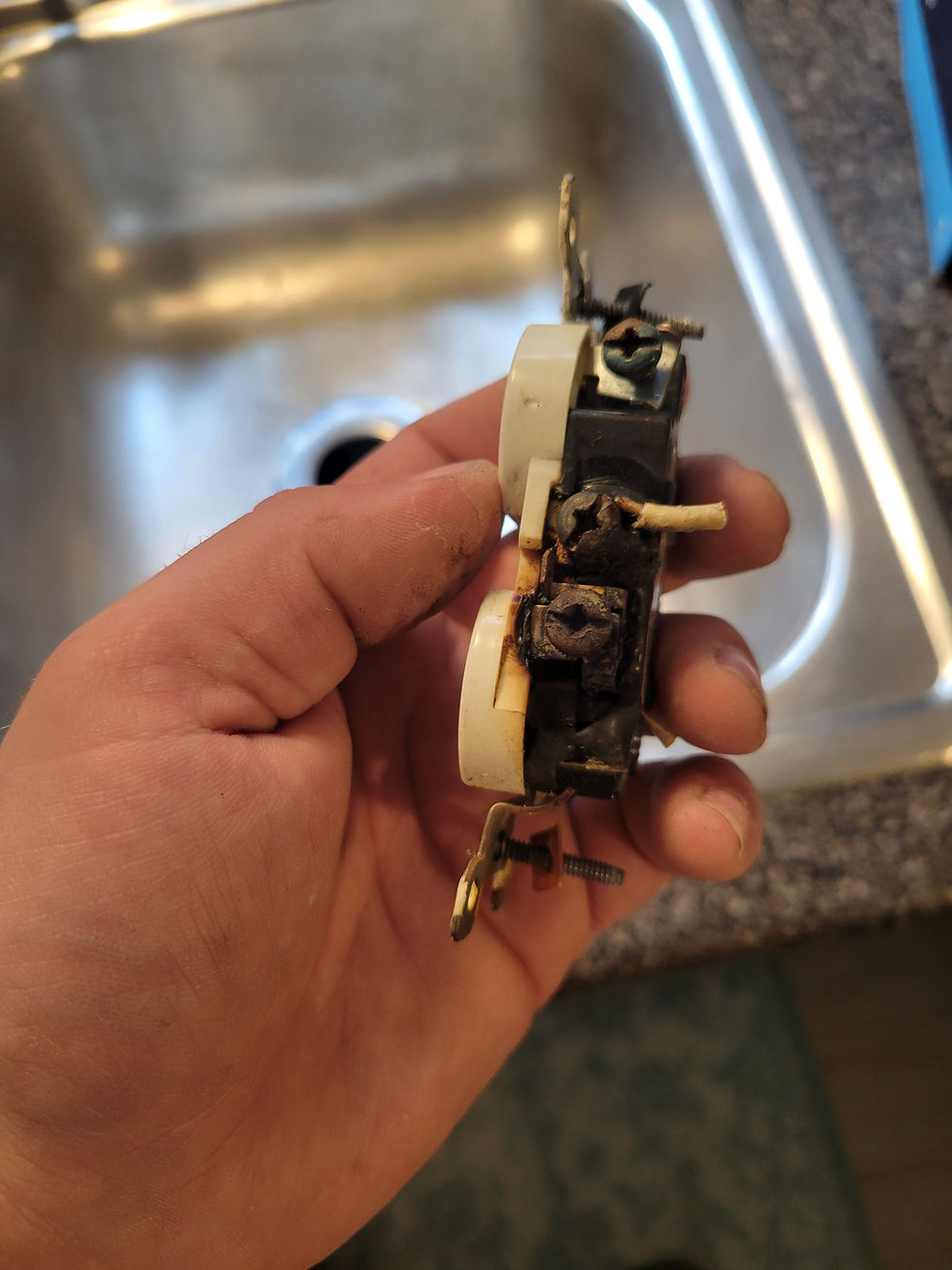
Heat can lead to melted receptacles, damaged wiring, and in severe cases, electrical fires.
We've personally encountered outlets that were:
Warm to the touch
Discolored from heat
Partially melted
Burned internally
Connected to wiring that showed signs of overheating
In some cases, we've found melted faceplates and damaged conductors hidden behind what appeared to be a perfectly normal outlet cover.
What starts as a phone charger falling out of the wall can eventually become a much larger electrical problem if ignored.
The Power Strip Warning Sign
Another common thing we see is homeowners adding surge protectors and power strips because there simply aren't enough outlets available.
While surge protectors have their place, they are not a permanent solution for a lack of receptacles.
Older homes were often built when families owned far fewer electrical devices than they do today. Between televisions, computers, gaming systems, chargers, kitchen appliances, and home office equipment, many homes are now placing demands on electrical systems that were never designed for modern usage.
If you're relying on multiple power strips and extension cords throughout your home, it may be time to consider adding properly installed receptacles where they're needed.
The Hidden Danger of Fake Grounded Outlets
One issue we frequently encounter in older homes is three-prong outlets installed on ungrounded two-wire circuits.
Many homes built decades ago were wired with two-conductor cable that did not include an equipment grounding conductor.
At some point, a previous homeowner or DIY remodeler may have replaced the original two-prong receptacles with modern-looking three-prong outlets without actually providing a ground.
The problem?
The outlet looks safe, but it may not provide the protection that modern appliances expect.
This creates a potentially unsafe and non-code-compliant installation.
The preferred solution is rewiring the circuit with modern grounded cable. When rewiring isn't practical due to construction limitations, GFCI protection may be a code-compliant alternative when installed and labeled correctly.
What About Bootleg Grounds?
Although we haven't personally encountered one in the field yet, bootleg grounds are worth discussing.
A bootleg ground occurs when someone improperly connects the neutral and ground together at a receptacle to make an outlet tester falsely indicate that the outlet is grounded.
While it may fool basic testing equipment, it creates safety concerns and violates electrical code requirements.
If you own an older home and aren't sure what exists behind your outlets, it's worth having them inspected to verify that they are wired correctly and safely.
Where Do We See These Problems Most Often?
These issues are not limited to one town or neighborhood.
We've encountered worn outlets, overheating receptacles, grounding concerns, and outdated wiring in:
Older homes
DIY remodeling projects
Properties that have changed hands multiple times
Homes that haven't had an electrical inspection since they were originally built
Throughout North Central Massachusetts, we are fortunate to have many beautiful older homes. However, older homes often come with older electrical systems that deserve periodic evaluation.
Signs It's Time to Replace an Outlet
Contact an electrician if you notice:
Plugs falling out of outlets
Outlets that feel warm or hot
Sparks when plugging something in
Cracked or damaged receptacles
Discoloration around the outlet
Burning smells
Flickering power
Two-prong outlets throughout the home
Loose faceplates or receptacles that move in the wall
These symptoms may indicate a worn receptacle, loose wiring connection, grounding issue, or other electrical safety concern.
Protect Your Home and Family
Electrical outlets are something we use every day and often take for granted. But when they become loose, damaged, or improperly wired, they can become a serious safety hazard.
If your outlet is warm, loose, sparking, discolored, or your plugs keep falling out, don't ignore the warning signs.
Contact Northern Mass Electrical Solutions for professional outlet repair, electrical troubleshooting, and electrical safety inspections throughout Gardner, Templeton, Winchendon, Athol, Ashburnham, Westminster, Hubbardston, and surrounding communities.
Learn more about our electrical safety inspection services here:



Comments